ServicesRoof Inspections
Roof Inspections in Atlantic Beach
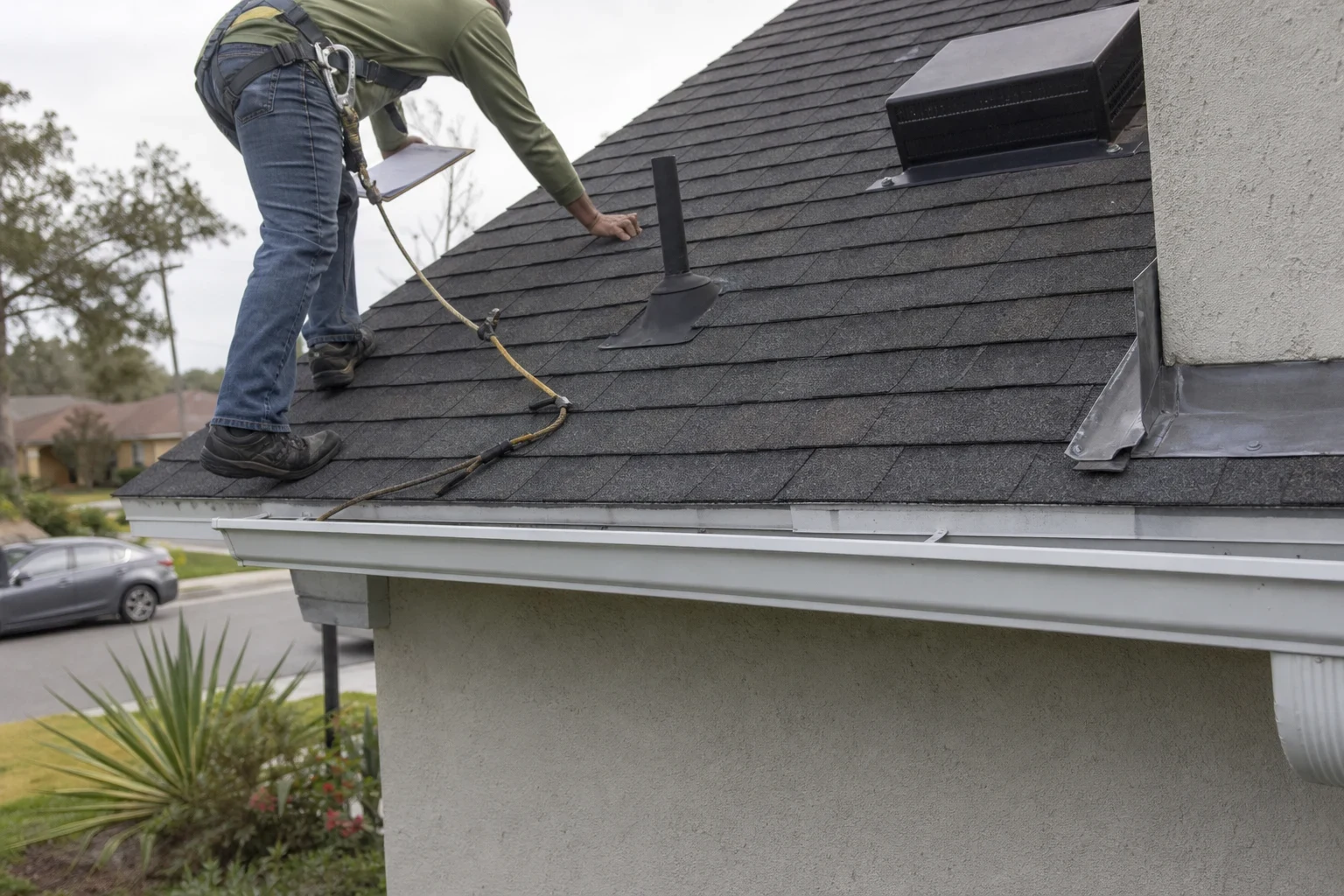
We check your roof covering, flashing, attic and gutters, photograph anything worth noting, and go over it with you in everyday terms. You finish the visit with a sorted list of what needs fixing soon, what can wait for a planned budget, and what to simply watch.
Know your roof's condition before it becomes urgent
An inspection covers every layer that keeps weather out of your house: the shingles, tile or metal, the flashing along chimneys and walls, the vents and pipe boots, the gutters and the attic underneath. We write down what we find, take pictures and tell you honestly how it's holding up.
What you really gain is time. Most roof trouble begins as something minor, such as a split vent boot or a lifted flashing edge, and stays minor for a while. Knowing early lets you fix it when it suits you and save for larger work instead of facing one big bill after a leak. On the coast, salt air and summer after summer of afternoon storms wear down fasteners and sealants sooner than most people assume.
Following a storm, the inspection also creates a record of any fresh damage. If you choose to file, we speak with your insurance adjuster directly and show them everything we recorded.
What we check on every inspection
- 01
Shingles, tile or metal
We walk the roof when it is safe to do so. On shingles we look for lifted tabs, creases and granule loss. On tile we look for cracks and slipped pieces, and on metal we check fasteners and cut edges for rust.
- 02
Flashing and roof openings
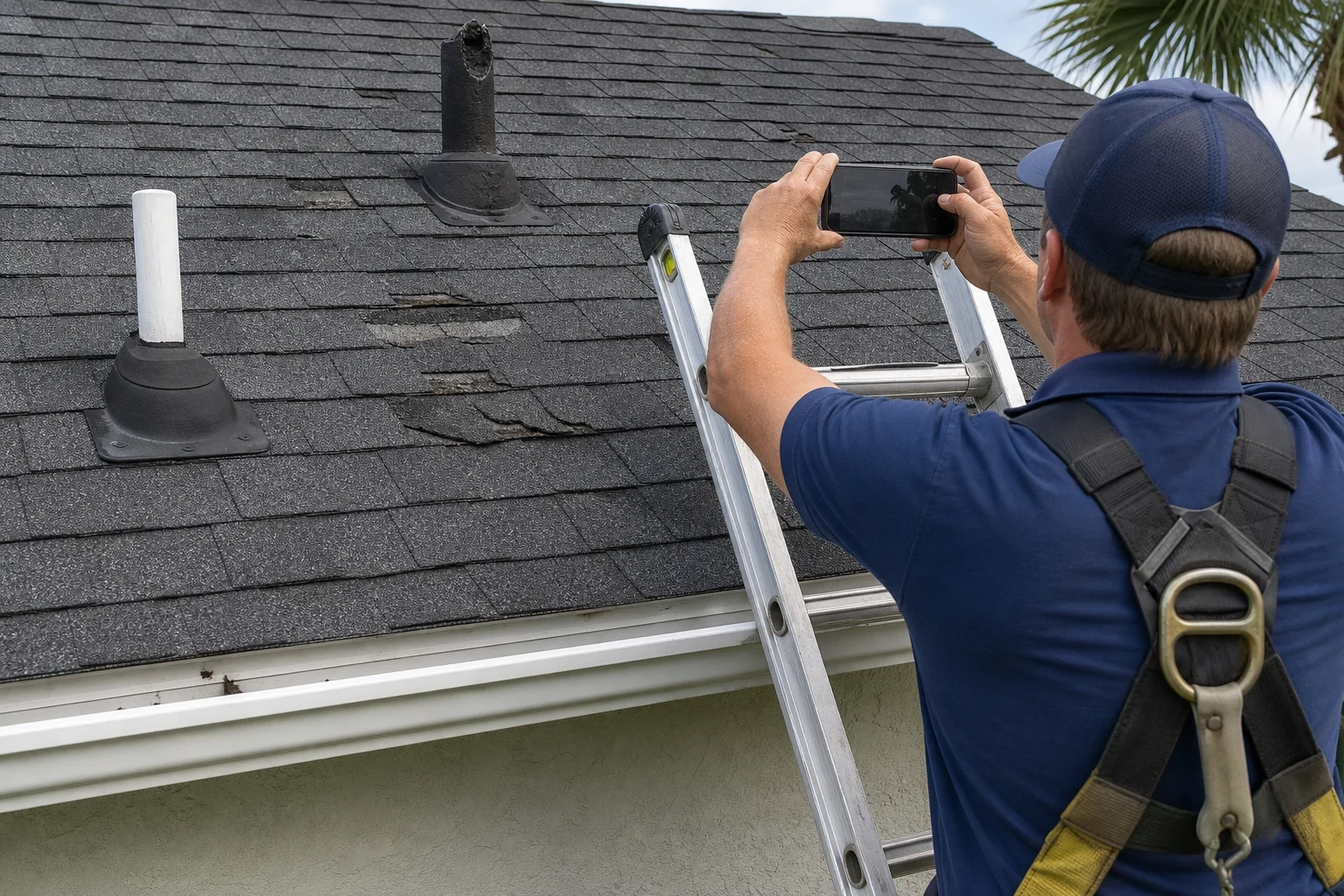
Most leaks begin where something passes through the roof. We check chimney and wall flashing, plumbing vent boots, skylights and exhaust vents, and note any sealant that has dried out or pulled away.
- 03
Attic and decking
Up in the attic we check for pinholes of light, stained rafters, wet insulation and wood that feels soft or has gone dark. Trouble often shows up here months before it reaches a ceiling.
- 04
Gutters and drainage
We make sure gutters are fastened, sloped toward the downspouts and clear, and that water lands away from your home. If they need work, our gutters page explains what we do.
- 05
Attic ventilation
A hot, humid attic cooks a roof from below. We check the soffit and ridge vents and tell you whether air is moving the way it should.
- 06
Photo record and short write-up
Every finding gets photographed, and we leave you a brief written rundown. Each item lands in one of three groups: fix now, plan for, and keep an eye on.
Questions about Roof Inspections?
Call(904) 541-9158When your roof is due for a look
A big storm came through
Strong wind and hard rain can loosen flashing or raise shingles in ways you can't see from the yard. A free post-storm inspection shows whether anything was damaged while it's still simple to record.
Stains inside the house
A yellowed spot on drywall or a dark rafter means water is getting through. It usually travels along the decking and framing before dripping, so the opening is often farther up the slope than the stain. We track it down from both inside and outside.
Grit building up in gutters
Aging shingles lose their granules. A little after a storm is expected, but heaps at the downspouts show the surface is getting thin.
The roof has some age on it
Hard sun and humidity wear a roof down year after year. If yours isn't new, an inspection helps you begin saving for roof replacement well before it's pressing.
You've just moved in
Learning the roof's true condition early on lets you budget for repairs rather than finding them in the middle of a downpour.
What happens on an inspection visit
- 1
A quick phone call
We ask how old the roof is, whether you've seen any leaks and if a storm played a part. Then we set a technician visit for a time that works for you.
- 2
From the ground to the roof
We begin in the yard, checking rooflines, gutters and downspouts, then climb up and go over the covering, flashing and vents one area at a time, taking photos along the way.
- 3
A look in the attic
If you're okay with it, we go up through the attic hatch. We keep things clean and don't linger.
- 4
Reviewing the results together
Before leaving, we sit with you and go through the photos. Sometimes it's a minor repair, sometimes a plan for the coming years, and often just good news that the roof is fine.
- 5
A price if repairs are needed
When something needs work, we give you a free, no-obligation estimate that lists every item. Financing is available if you'd like to spread out payments.
What an inspection costs, and what drives the price of any follow-up work
After a storm, the inspection costs nothing, and neither does the estimate for any work it uncovers. For a routine visit at other times, we'll explain by phone what it includes before booking. The larger costs come from the work itself, and these are the things that set them.
- How big and steep the roof is
- A larger roof takes more material, and a steep one needs added safety gear and slower, more careful steps. Both push repair and replacement prices up.
- What the roof is made of
- Repairs on shingle, tile and metal are priced differently. If you're thinking about switching, our metal roofing page explains how it stacks up over the years.
- Hidden damage
- Rotted fascia or weak decking only turns up on a close look. Spotting it during the inspection puts it in your estimate rather than surprising you partway through the job.
- When the problem gets found
- Loose flashing is a minor fix. Leave it through a wet summer and it can turn into new decking, insulation and drywall. Finding it early is the easiest way to hold costs down.
What people ask about roof inspections
How often does a roof need an inspection?
For most houses, a yearly check works well, with an extra visit after any strong storm. Plenty of owners book theirs in spring, so repairs wrap up before hurricane season begins in June. An older roof deserves more frequent attention.
Does someone need to be home while you inspect?
It's useful, mostly so we can reach the attic and talk through the results with you in person. If you're away, we can look over the exterior and review the photos with you by phone later.
Is this just a pitch for a new roof?
No. Most visits finish with a few minor items or nothing to fix. When a replacement really is the right call, we back it up with photos and help you work out timing and budget without rushing you.
Can the inspection support an insurance claim?
Yes, it can. If a storm caused the damage, we photograph it and note its location while it's fresh. Should you file, we speak with your adjuster ourselves and share our records. Coverage is your insurer's decision; we show what shape the roof is in and what fixing it takes. See our storm damage repair page for what comes next.
Can you check tile and metal roofs as well?
Yes. Every material breaks down differently, so on tile we look for cracked or shifted pieces, and on metal we look for loose fasteners, tired seals and rust, plus the flashing and underlayment under each.
What towns do you cover?
We handle inspections in Atlantic Beach and the towns around it, among them Neptune Beach, Jacksonville Beach, Palm Valley, Sawgrass and Nocatee. Call us and we'll confirm we reach your street.
Know where your roof stands before the next storm
A short visit gives you photos, a clear list and time to plan. If anything needs work, your estimate is free and there is no obligation.