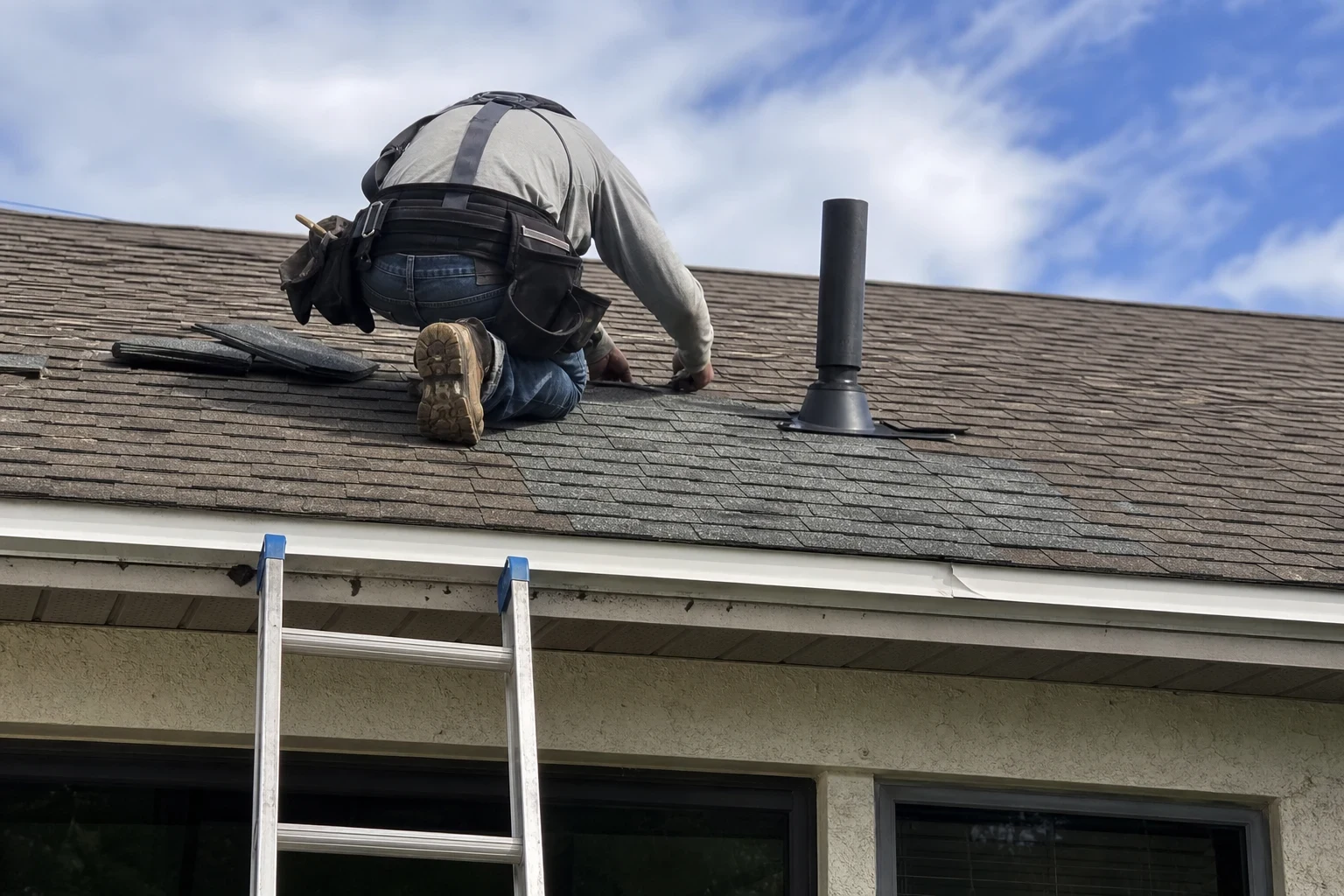
ServicesRoof Repair
Roof Repair in Atlantic Beach, Caught Early and Fixed Right
A small leak or a few loose shingles rarely stays small. We find where the water is really getting in, show you what we found, and price the repair in writing so you can fix it now and plan for what comes later.
Knowing When a Repair Will Do
Roofs tend to wear out one spot at a time. The sun dries out a rubber pipe boot until it splits, a run of flashing works loose, or a gusty afternoon peels back a few shingles near the eaves. When everything around that spot is still solid, fixing it properly can give you years of use and room to save for a new roof when it suits you.
You'll get a straight answer from us on whether repairing is worth it. If your roof is close to worn out, we'll tell you that too and explain what a roof replacement would look like, so you make the call with all the facts in front of you.
Salt air near the coast is hard on metal parts, so we pay close attention to fasteners, drip edge and flashing, where corrosion often starts before you can see a stain inside.
What Our Repairs Take Care Of
Finding the real source
Water can run several feet along a rafter or the sheathing before it drips, so the ceiling stain may sit well away from the actual opening. We check from inside the attic and from up on the roof to pin down the entry point.
New shingles and tile
Broken, missing or raised pieces get replaced, matched to your current roof as nearly as it allows. If the color will differ, you see it before work starts.
Flashing and vent boots
Leaks usually start around chimneys, walls, skylights and plumbing vents. We reseal or renew the flashing there and replace rubber boots that the sun has dried and cracked.
Soft decking
When the wood beneath the shingles has softened, we remove that piece and put in fresh sheathing, giving the repair a sound base.
Ridge caps and vents
Wind-driven rain gets in through loose ridge caps and worn roof vents. We fasten them back down or replace them and make sure air still moves freely through the attic.
Clues Your Roof Needs Attention
Marks on ceilings or walls
Bubbling paint or a yellow ring means water is already inside. The gap causing it is usually small, and finding it soon keeps the repair simple.
Shingle pieces on the lawn
Finding shingles on the ground after a breezy day means part of your roof is now uncovered.
Rusty flashing or nail heads
Flaking metal or orange streaks show corrosion that will open a gap sooner or later.
A wet or musty attic
Damp insulation, dark wood or a mildew smell in the attic often shows up long before a ceiling stain does.
Sandy grit in the gutters
Grit piling up in the gutters means the shingles are losing their protective surface. It's a sensible time for an inspection so you can plan, and our gutters page lists what else to watch for there.
What Happens on a Repair
- 1
Free inspection with photos
We check the roof and the attic, photograph the problem areas and explain what's behind them in plain language.
- 2
Your price in writing
The estimate lists the repair line by line, with notes on anything that can be put off. No work begins until you approve it.
- 3
Doing the repair
We cover plants and walkways, pull off the damaged material, inspect the decking and put down new materials. One visit handles most repairs.
- 4
Cleanup and last look
A magnet sweep picks up nails, debris gets hauled away, and you get photos of the completed repair.
What Shapes the Cost of a Roof Repair
We price a repair only after we've been up on your roof, because one ceiling stain can come from a single popped nail or from a rotted patch of decking. The written estimate breaks the job into separate lines, so nothing in the total is a mystery. Financing is available if it helps you handle the work now instead of putting it off.
- Size of the damaged area
- A single pipe boot is a quick job. A wide section of lifted shingles takes more material and time.
- What's underneath
- Soft or rotted decking adds cost, and we only know for sure once the surface layer is off. If we find more than expected, we stop and talk with you before going further.
- Roofing material
- Shingle, tile and metal each take different parts and methods, and some older products are harder to match.
- Pitch and access
- Steep roofs and tight spots need extra safety setup, which adds labor.
- Permits
- Larger repairs can require a permit under Florida's building code. When one is needed, we pull it and include it in the estimate.
Questions Homeowners Ask About Repairs
Something not covered here? (904) 541-9158
Is my roof fixable, or is it time to replace it?
That hinges on how old the roof is and whether the damage is in one place or spread everywhere. When the trouble stays in one area and the nearby shingles are still in good shape, repairing it usually makes sense. When every slope shows wear, we say so directly and give you a realistic sense of how long a repair would last, so you can plan the money for what follows.
Can you match my existing shingles?
As closely as possible. Sun fades shingles over time, so fresh ones can look a shade off at first. You'll see samples before any work starts.
Will insurance pay for my leak?
Damage from a single event such as a windstorm often qualifies, while age and normal wear generally don't. We photograph what we find, and on storm damage claims we deal with your insurance adjuster directly. The storm damage repair page walks through that process.
How long will the repair take?
Most take anywhere from a few hours to one day. New decking or rebuilt chimney flashing can stretch longer, and we'll tell you the expected time before we begin.
Is it smarter to wait until after hurricane season?
We'd advise against waiting. A weak spot is much more likely to give way in strong wind, so fixing it during calmer months takes one worry off your list before storms show up in the forecast.
Fix the Small Problem Before It Grows
Tell us what you're seeing and we'll set up a time to look at your roof. You'll get photos, a clear explanation and a written estimate, with no obligation.